Arctic Story House
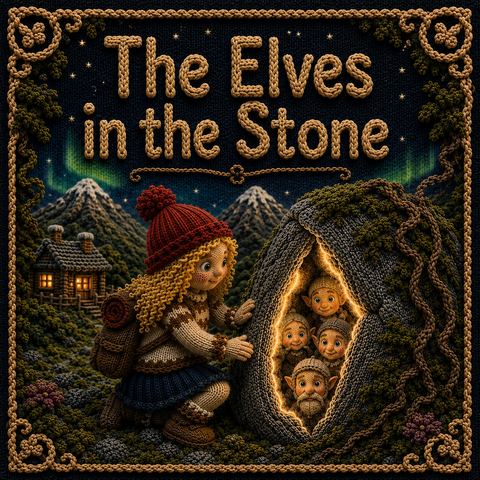
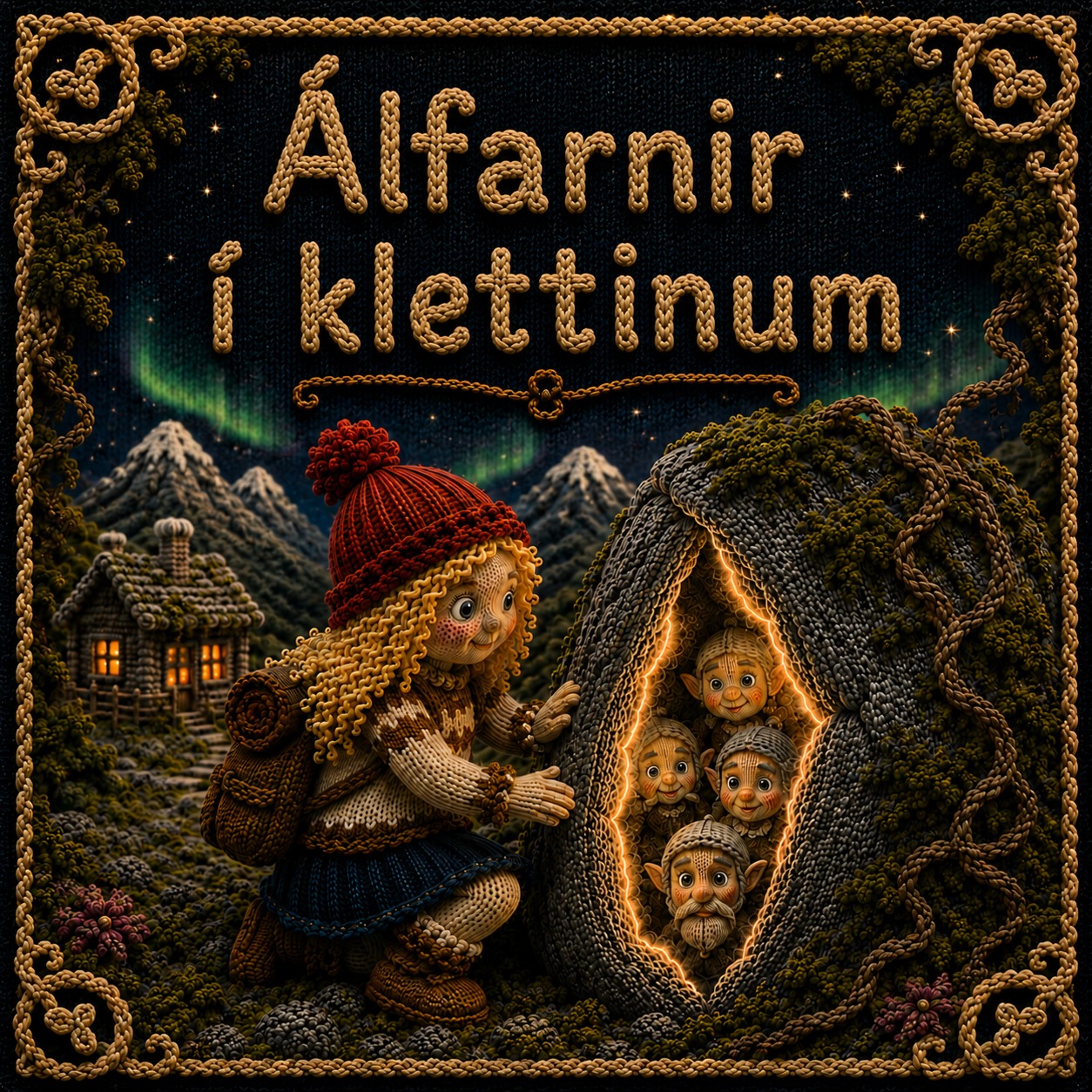
The Elves in the Stone
Once there was a small farm at the foot of a mountain, where the grass was soft in summer and snow lingered long in the shadows come spring. Above the farm stood a great boulder, grey and moss-grown, and no one ever laid a hand on it. Children could play around it, but they were never to climb it, strike it, or throw stones at it.
"That rock has owners," the old woman of the farm always said. "They aren't always seen, but they hear more than people think."
A girl named Rúna lived on the farm. She was not fearful by nature, but neither was she careless. She had often sat by the rock and heard a strange murmur from within it — distant songs, or small footsteps on a floor where no house stood.
One winter turned hard on the district. The sheep grew gaunt, the meal in the chests dwindled, and firewood ran out sooner than expected. Rúna's father decided to break stone from the boulder to build a new wall for the sheep-shed.
The old woman rose from her seat. "You must not do that," she said. "Not to that rock."
"I can't feed the children on stories," the father answered. "The wall will fall if I do nothing."
The next morning he went up to the rock with a crowbar. Rúna followed, uneasy. The wind stood still on the slope, as if everything had stopped breathing.
The father lifted the crowbar and struck the rock. At once, crying was heard — not loud, but small and frightened, as if a child had woken inside the stone.
The father froze. Rúna gripped his sleeve. "Father," she whispered. "Stop."
He looked at the crack that had formed. Pale dust glittered in the darkness within, and from inside the rock came a weak voice: "Do not break our house."
The father stepped back. He said nothing, took up the crowbar, and went home, pale as snow.
That evening the household sat silent by the fire. No one wanted to speak of the voice. But when everyone had gone to sleep, Rúna heard a soft knock at the window.
She rose and saw a small light outside in the darkness. At the window stood a woman no taller than a child, dressed in a green cloak that seemed woven of moss and night-shadow. Her eyes were bright as dew on stone.
"Rúna," said the woman. "You heard our child crying."
Rúna nodded. "Your father meant no harm," said the elf-woman. "But people sometimes forget that homes can stand where they see only stone."
"We need stone," said Rúna. "And we have little left."
The elf-woman looked at her a long while. "Come with me, then."
Rúna put on her woolen socks and cloak and went out. The elf-woman laid her palm on the rock, and where grey stone had stood, a small passage opened, soft with light.
Rúna stepped inside. Within the rock it was not cold and dark, but warm and golden. There were small rooms with walls of glittering stone, beds of moss, lamps burning without flame, and shy children watching her from doorways. She saw a little cradle where the crying child now slept peacefully.
The elf-woman led her to a great hall where elves sat at a table. They were neither quite like humans nor quite unlike them. They were quieter, and it seemed the shadows obeyed them.
"The people below the rock are hungry," said the elf-woman to her folk, "but they stopped when they heard us."
An old elf rose. His beard was white as frost on a window. "Then they should not suffer for their mercy," he said.
He handed Rúna a small pouch. "Do not open it before sunrise."
Rúna thanked them and went home. When she looked back, the passage was gone, and the rock was only a rock again.
In the morning the old woman opened the pouch. Inside was not gold or silver, but seeds — small, dark, quite ordinary seeds.
Rúna's father sighed. "Seeds won't feed us today."
But the old woman smiled. "Not today. But perhaps longer than gold."
They sowed the seeds in a small patch below the rock. That summer, barley grew there so thick and tall that no one had seen the like. Every grain was full and heavy, and when autumn came the storage chests overflowed. They had enough for themselves, enough for the animals, and enough to give to neighbors in need.
Rúna's father built the new wall from stone he found far down by the river. He never touched the rock again.
From that day, Rúna sometimes left a small bowl of milk by the rock in the evenings. In the morning the bowl was empty, and in its place sometimes lay a small flower, impossible to find anywhere else in the valley.
When Rúna grew old and children asked her whether elves were real, she did not answer at once. She would look up at the rock, where moss lay soft over grey stone.
"There are houses people don't see," she said. "And it's best to tread carefully where the world falls quiet."