They say Arctic Story House is a window, not a door. You can look through it as long as you like — the world on the other side goes on living whether you're watching or not — but you cannot climb through. It can reach you. You cannot reach it. Every story, song, and video on this site is only ever a piece of what's visible through that one window.
What you're looking at is not our world. It has its own name: Nornavefur — the Norns' Web. The old ones there say that everything around them was woven, stitch by stitch, into being, and that some of it is being woven still. Nornavefur is a single island, and that island is the entire world — nothing lies beyond its coast but fog and sea. Each region functions the way a whole country does in ours, and most who live there never once set foot outside their own corner of the web.
Sailing the coast
Up on the east coast, the land rises into Trölladyngja, a single mountain so tall its peak is rarely free of cloud — troll country, and trolls do not care for travel. Follow the shore around and you'll find LitlaVík, a huddle of turf-roofed halls and fishing boats, the vikings' home water — close enough to Trölladyngja to see its smoke, far enough that the two rarely speak. Inland, where the fog sits thickest and never quite burns off, the land climbs again into Nornatindar, the witch peaks, where the wise-women keep their houses well above where ordinary paths run out. Further along the coast, a scatter of small islands breaks the water — Þorskhausaeyjar, the cod-head isles, where the human-looking folk mend their nets in the wind. There's a fjord where something stranger happens, too: Lífsandafjörður, where a moss grows that changes any stray animal who eats it — they wake up walking and talking like a person, while still looking, unmistakably, like whatever they always were. And not everything is on the map at all: the huldufólk keep a realm reached only through small painted doors on stone, doorways no bigger than a matchbox that can open onto something as vast as a hidden village.
Animals belong to none of these regions and all of them, wandering the whole island freely — and at the heart of it all, where the fjord Gufuvík opens into a harbor, stands Gufubær, the one place where every kind of folk lives shoulder to shoulder. This is where the old stories get performed: actors based in the city play the trolls and ghosts and witches of the ancient tales, which is exactly why the tales don't feel too frightening to tell — everyone knows the monster on stage is a friendly neighbor once the lights come up.
A warning worth keeping
Not every dweller of Nornavefur belongs to a region, and not all of them are friendly. Highest and oldest of anyone in Nornatindar sits Prjónavölva, the Knitting Seeress — there before the witches ever came to the peaks, and still knitting. Her hut has no door, only a single loose thread trailing out from under the eaves and off into the wind. Follow the thread and you'll find her. The thread also, if it wants to, finds you. Every soul born into Nornavefur is said to be a single stitch in a shawl she has been knitting since before anyone can remember — and the stories about her are rarely about her cruelty. They're about the handful of clever ones who talked their way into getting a dropped stitch picked back up.
The movies — roles vs. real characters
Nothing named inside a Þjóðsögur story — Búkolla the cow, Grettir, Glámur, the troll-women — is a real character in this world. Those are movie roles, adapted from old folklore and played by real actors based in Gufubær. The real character is always the actor behind the role. "Búkolla," for example, is a role — the actor who plays her is Ester, a transformed-animal actor native to Lífsandafjörður, who ate the moss, became human-like while still visibly a cow, moved to Gufubær, and landed the studio's biggest production. See the Characters page for the full cast, split the same way: the roles, and the real people playing them.
Credits
Story retellings (Icelandic text): Katrín Holm. Project creator: Einar. The underlying folklore motifs are traditional, public-domain 19th-century Icelandic material, freshly retold for this project.
Featured characters
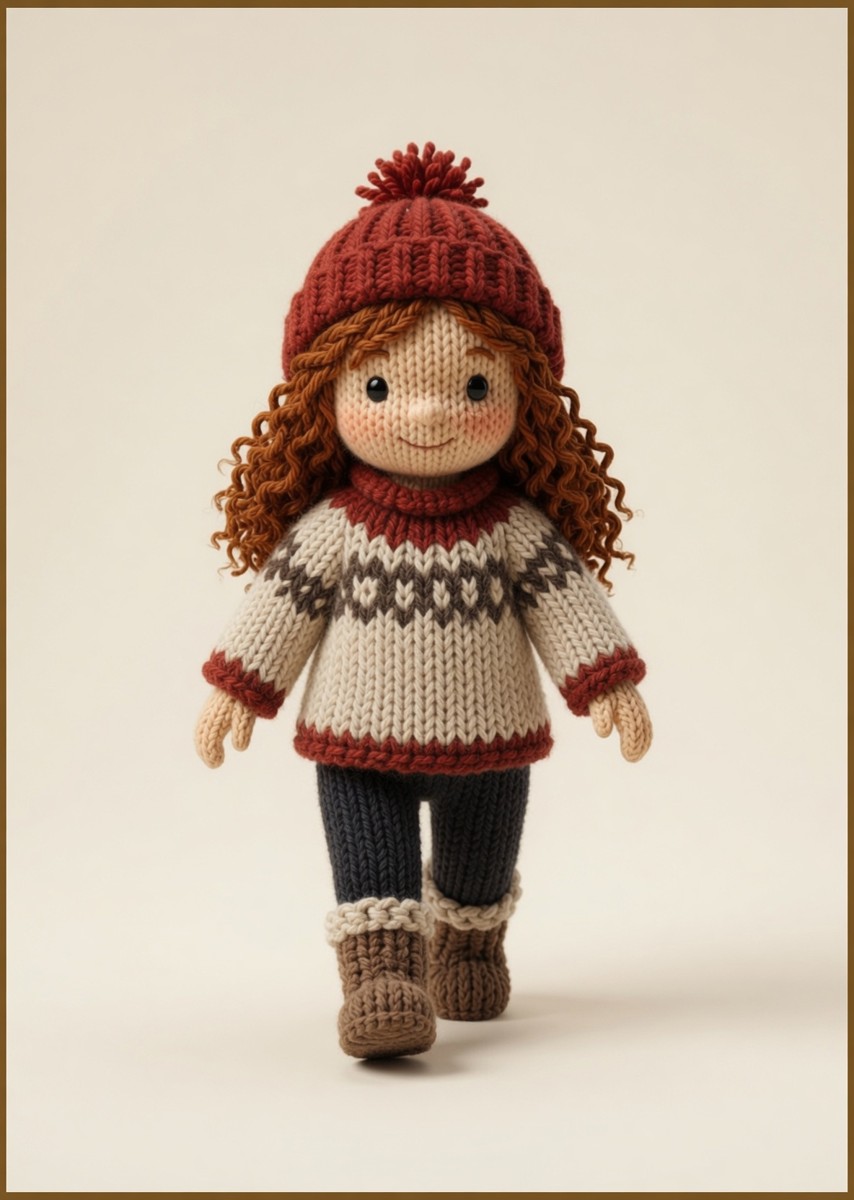
The Girl
The unnamed protagonist of Búkolla — daughter of the old man and old woman.
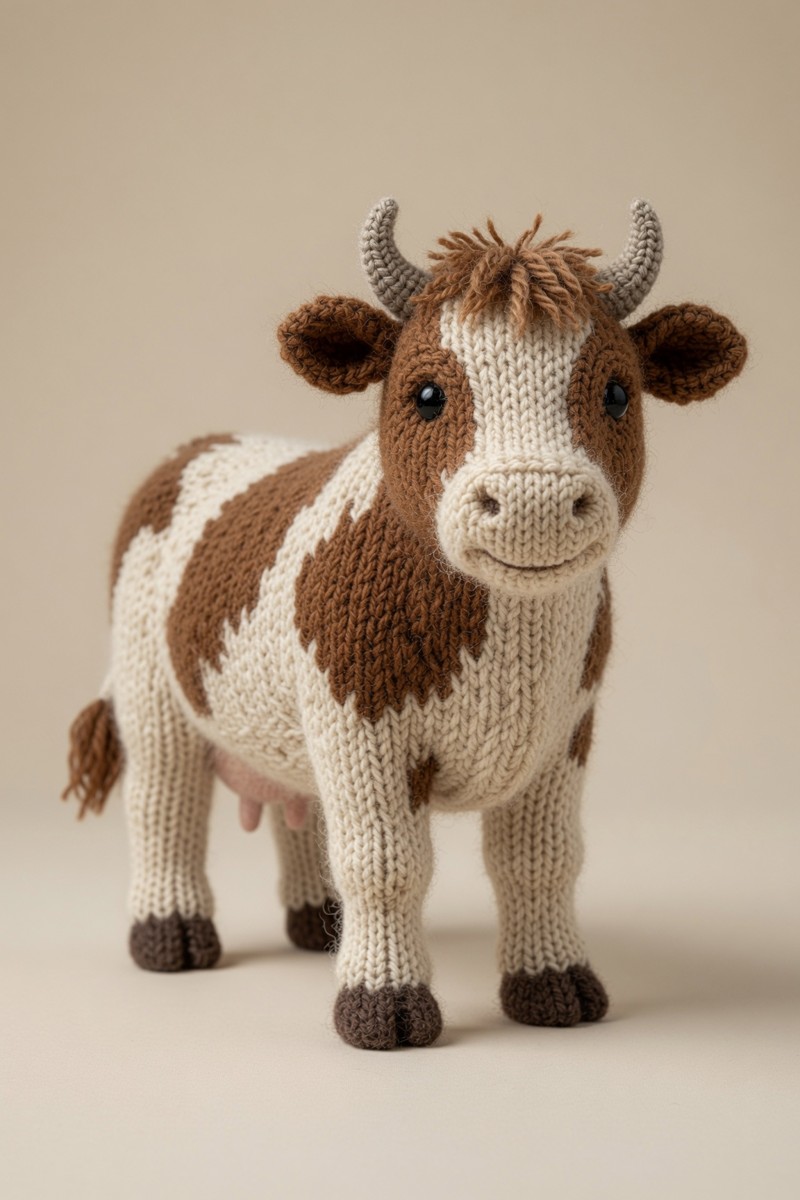
Búkolla
Played by Ester. Gentle knitted cow, brown-and-white patched coat.